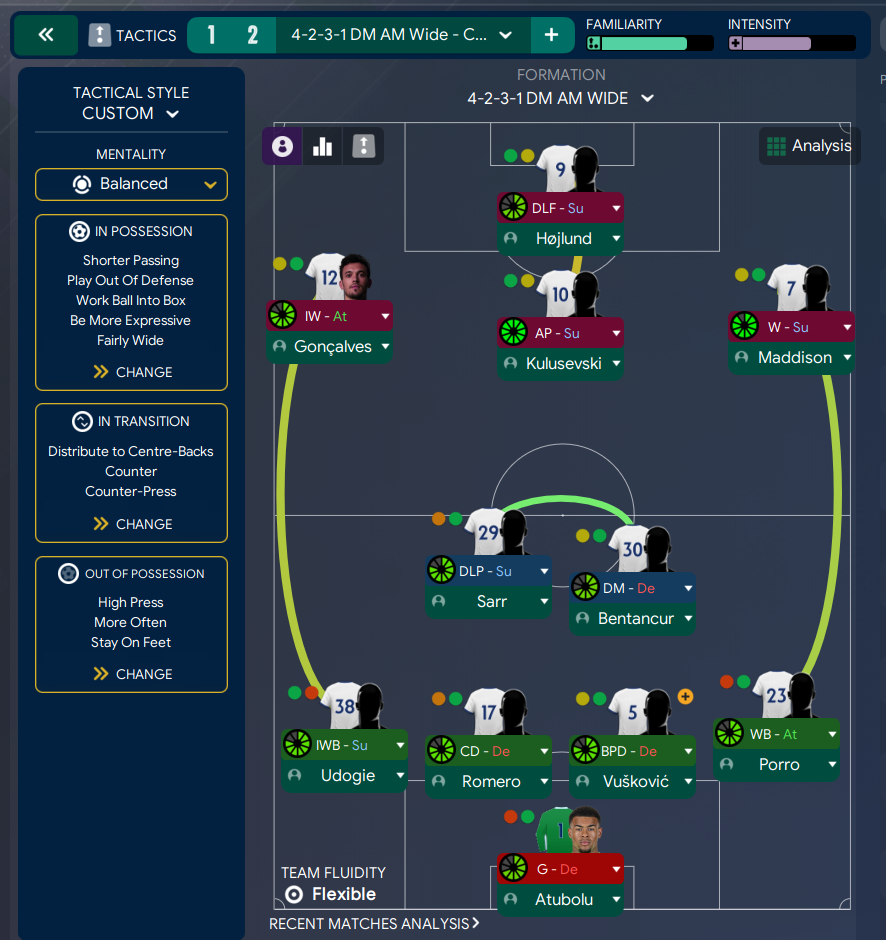
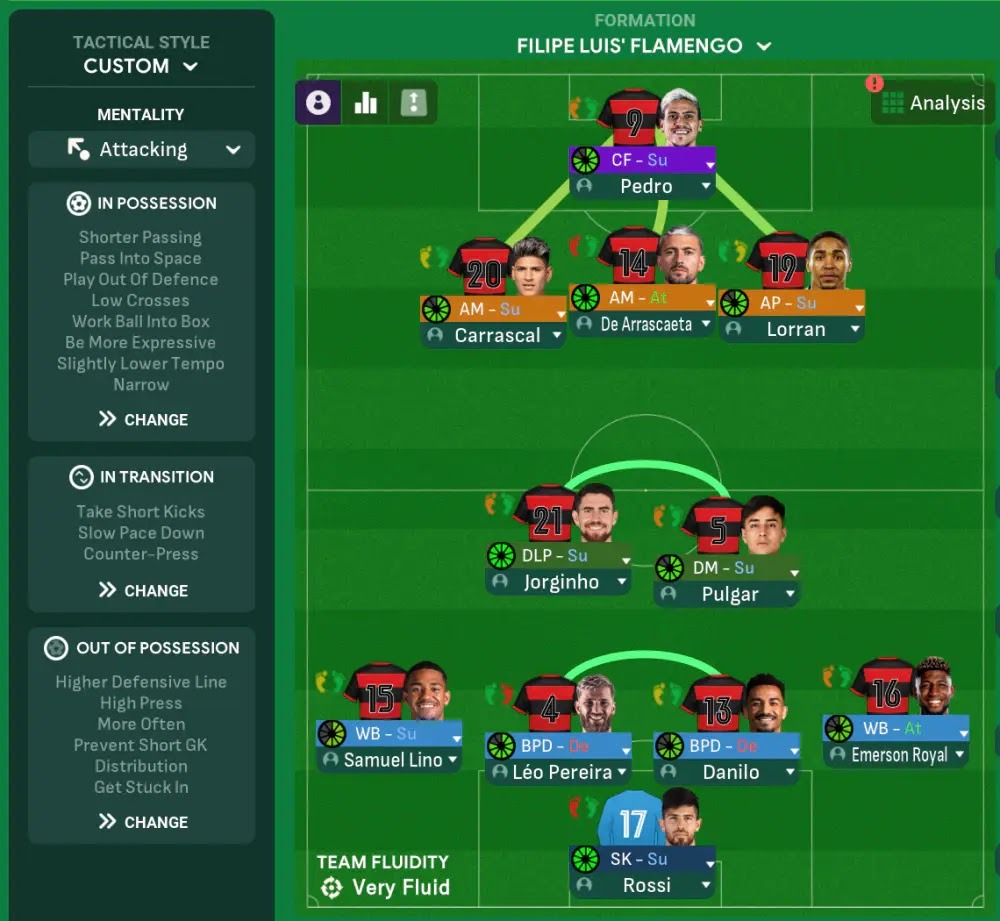
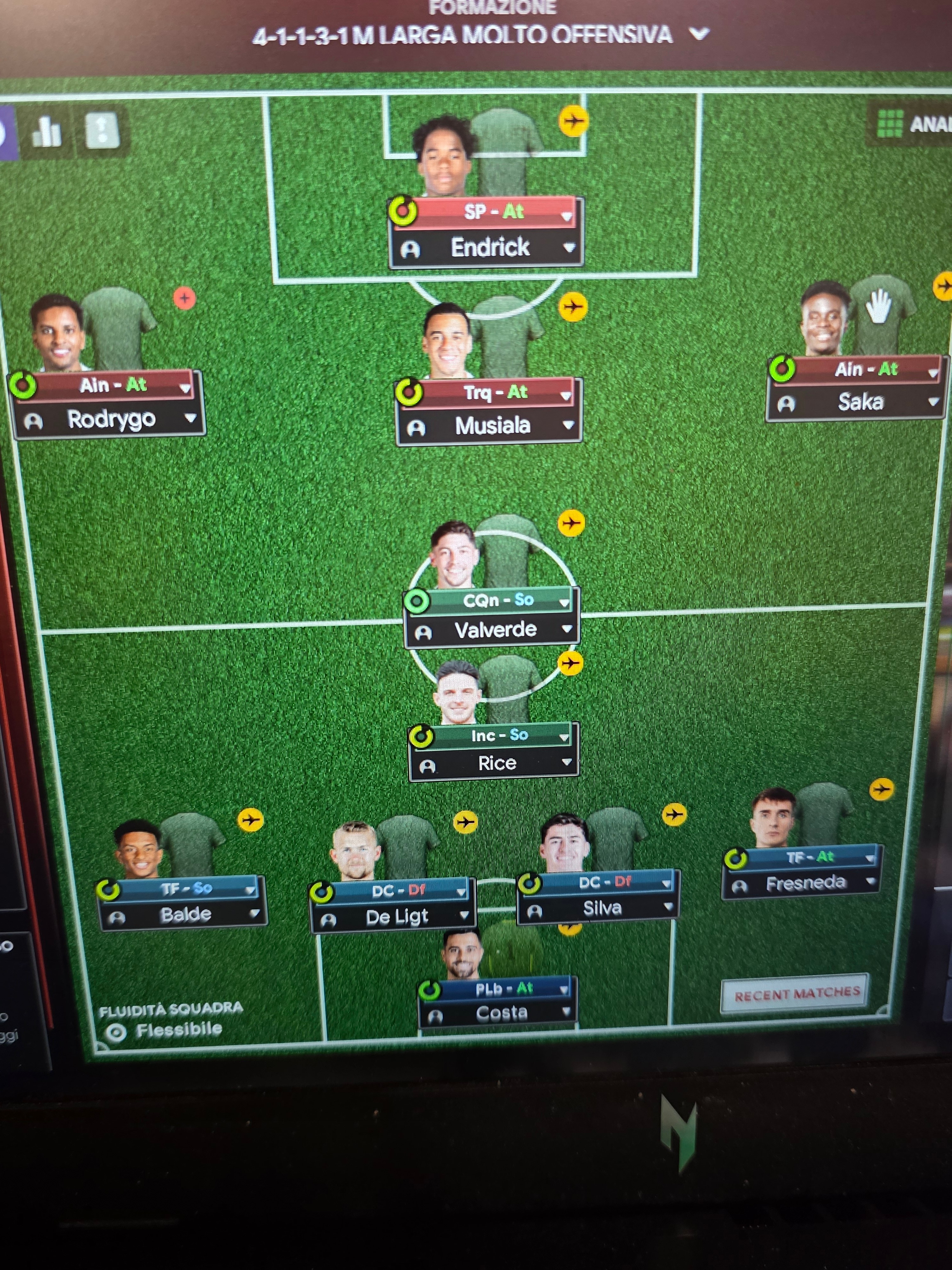
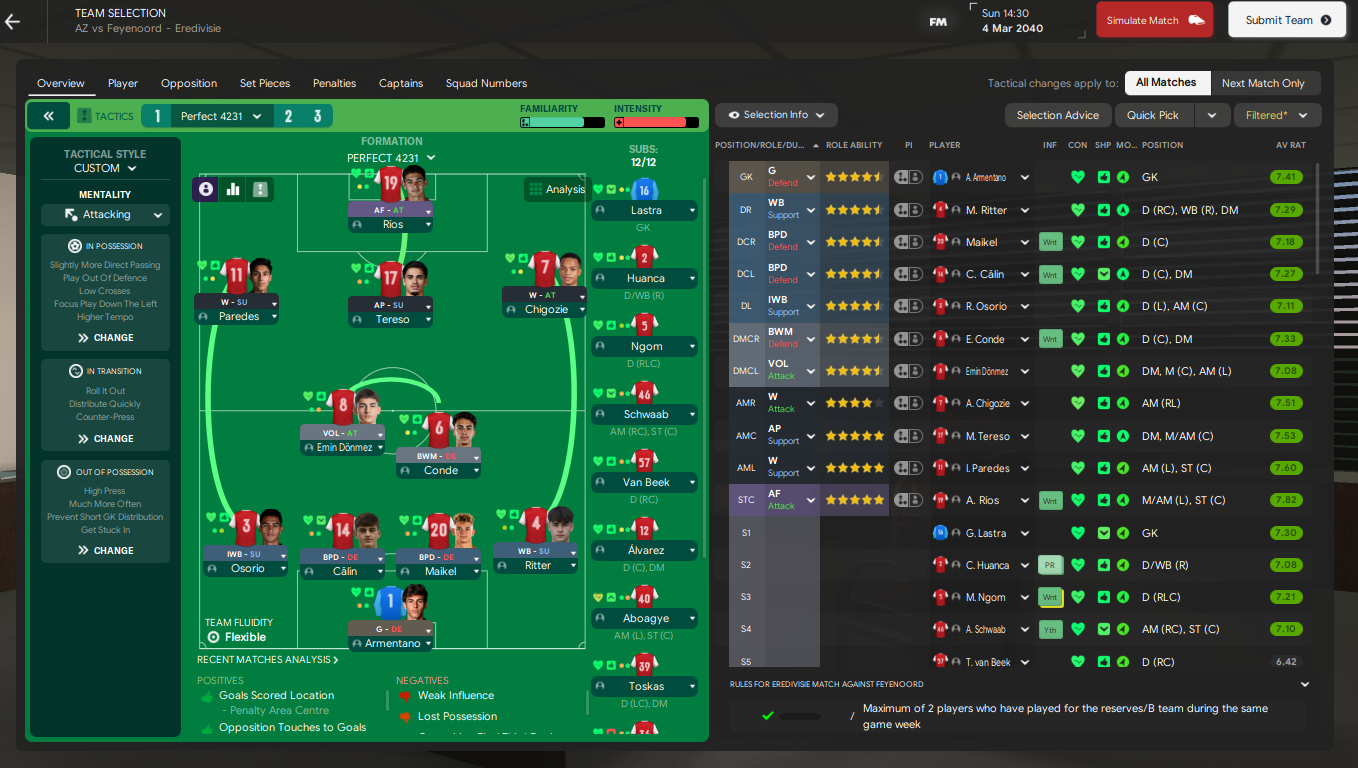
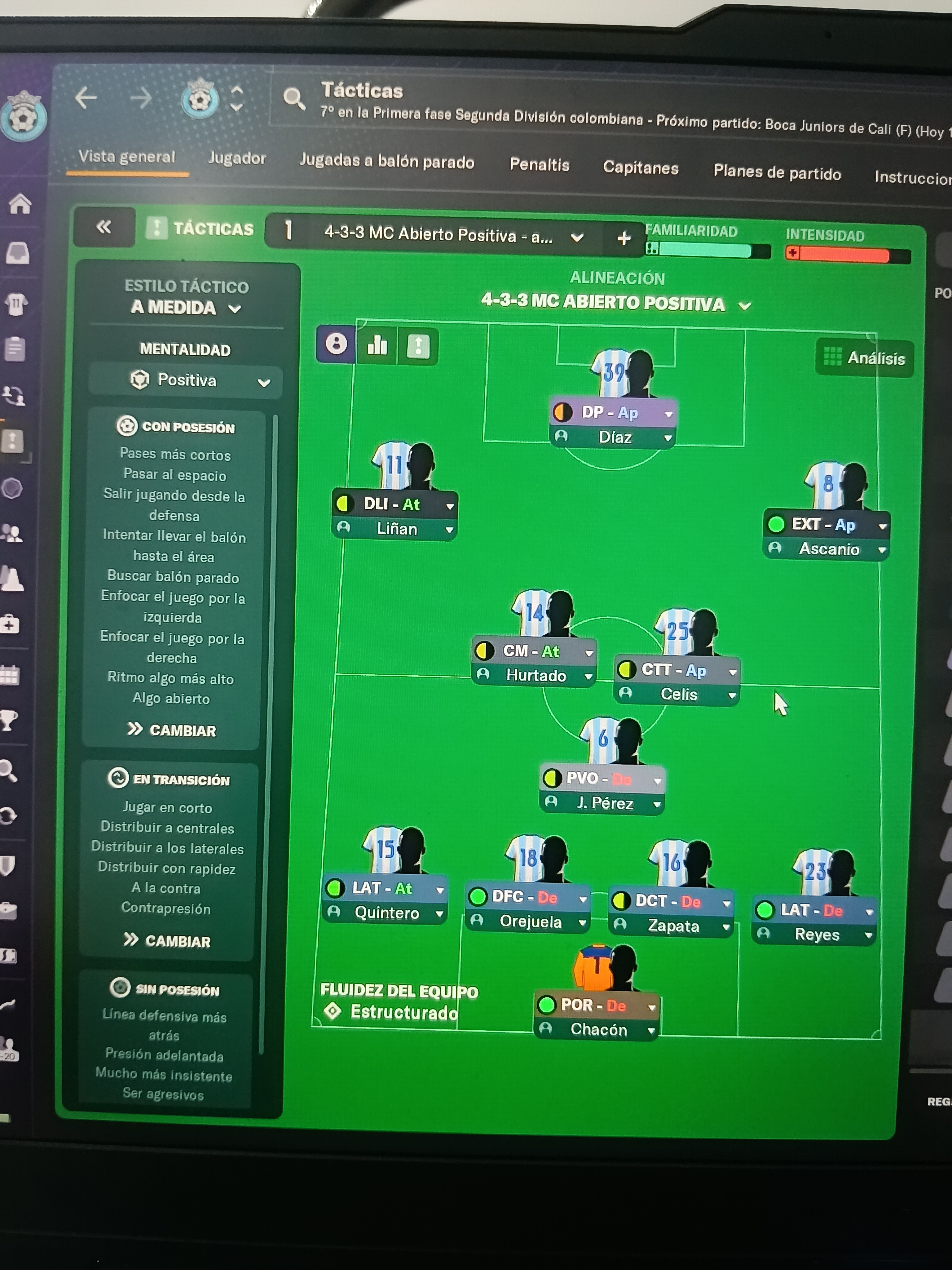
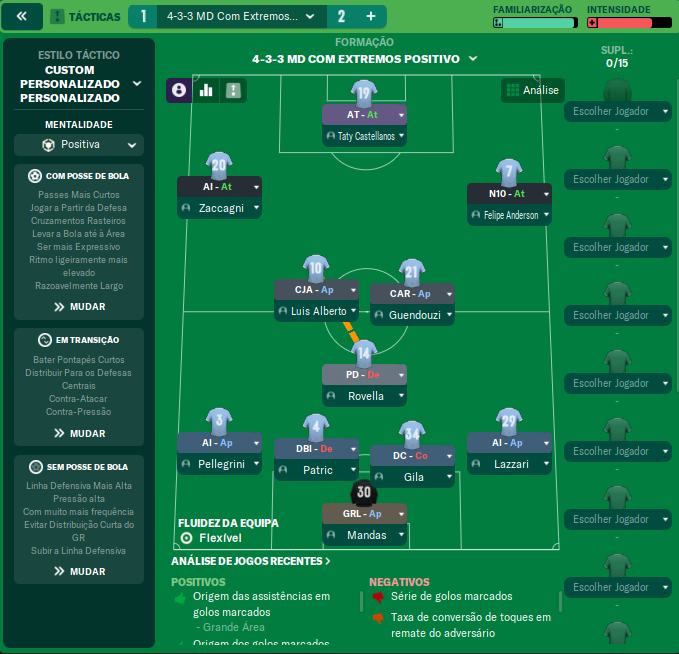
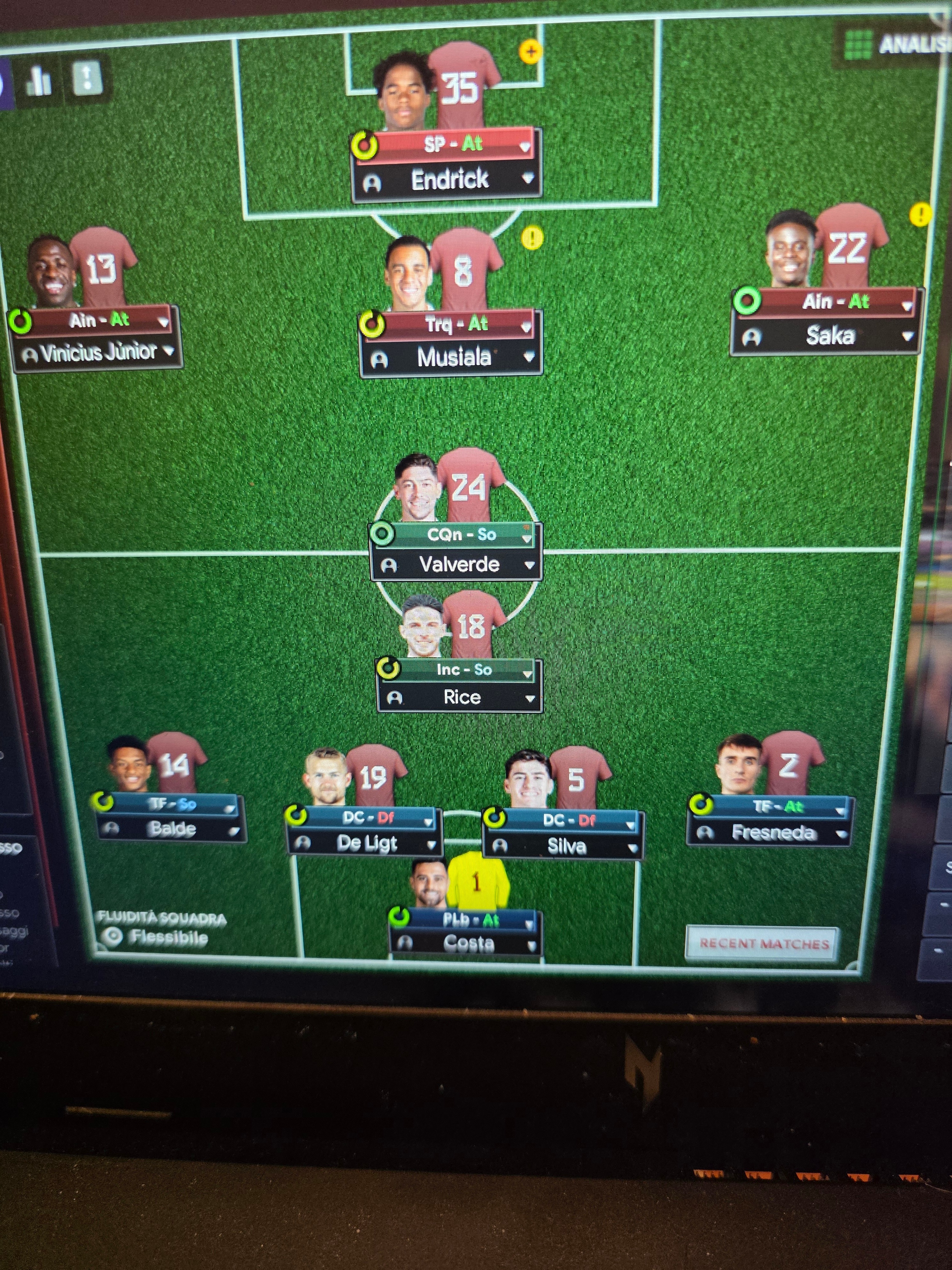
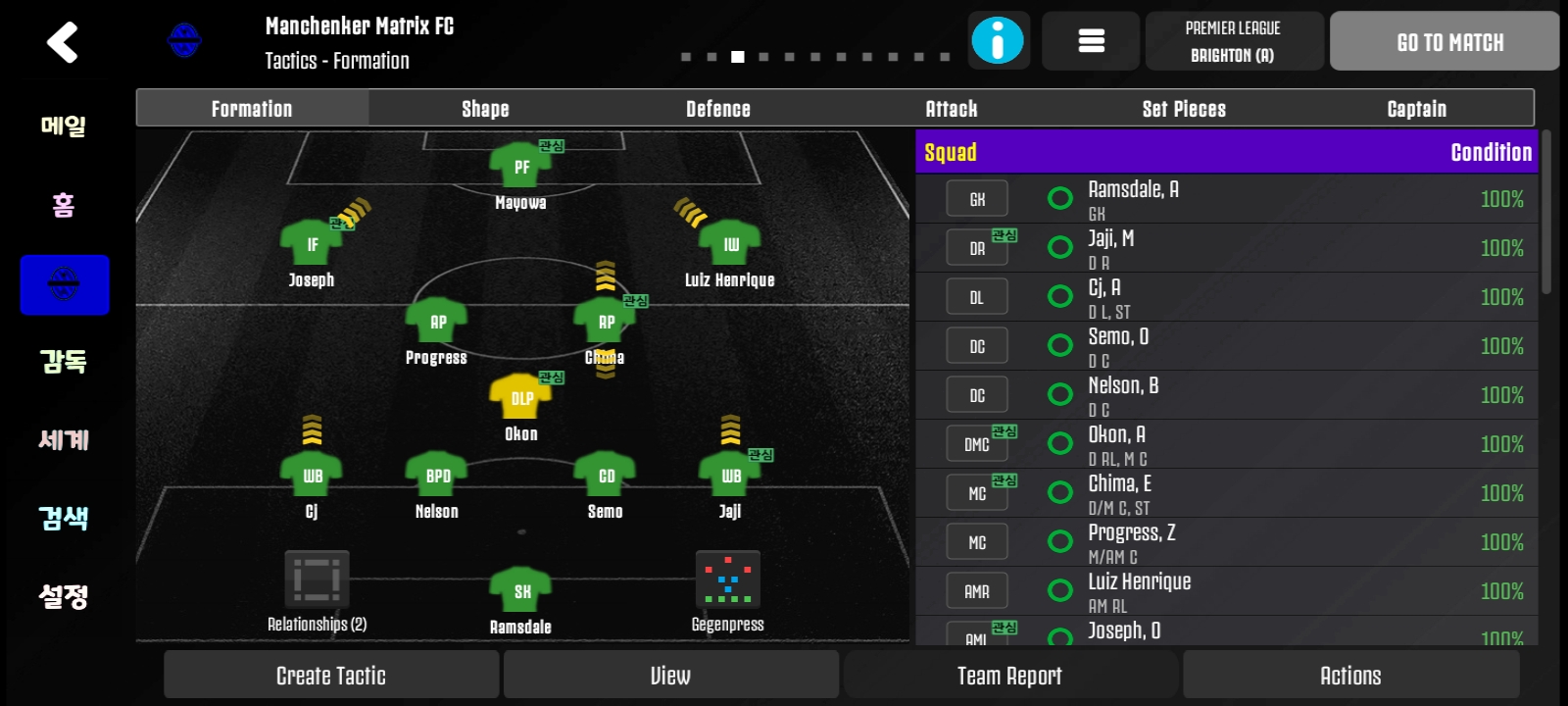
4-2-3-1
Dynamic and fluid attacking play with effective pressing in defense. Utilizing both width and central plays allows multiple attacking avenues.
Loading tactical analysis...
Gegenpress
4-2-3-1
Pass Into Space
Work Ball Into Box
Counter-Press
Counter
Higher Line of Engagement
Higher Defensive Line
Trigger Press More Often
GK
GK
DR
WB
Attack
DL
BPD
Support
DC
CD
DC
BPD
DM
DLP
Support
MC
AP
Support
MC
RP
Support
AM
IF
Attack
ST
PF
Attack
Utilizes width from the wingers and full-backs, focusing on creating overloads in the final third.
Quickly transitions to regain possession through high pressing and counter-pressing.
Dynamic and fluid attacking play with effective pressing in defense.
4-2
A structured defensive shape providing cover through two holding midfielders.
CD at [2,3] and BPD at [2,2] maintaining defensive solidity.
4-3
Overloads created via wide play with a central presence through the attacking midfielder.
IF at [5,2], AP at [4,3], and PF at [6,3] enhancing attack.
Utilizing both width and central plays allows multiple attacking avenues.
IF at [5,2] and AP at [4,3] enhance versatility in attack.
The Gegenpress style helps win back possession high up the pitch.
With 'Trigger Press More Often' and 'Counter-Press', we press effectively.
Higher defensive line may expose the back four during counter-attacks.
Higher Defensive Line can lead to being caught on the break.
Playing out from the back may become too intricate under pressure.
DLP at [3,3] needing to work in tight spaces increases turnover risks.
Defensive Line Exposure
A higher defensive line can lead to gaps exploited by speedy forwards.
Higher Defensive Line increases risk of being caught out.
Midfield Overload
Two midfielders may get outnumbered against teams playing three in midfield.
DLP and AP working against opponents with three in midfield risks losing control.
BPD + DLP
Combining a Ball-Playing Defender with a Deep-Lying Playmaker reinforces midfield support.
BPD at [2,2] passing into DLP at [3,3] facilitates progression.
IF + PF
Inside Forward supports the Pressing Forward, creating movement and space.
IF at [5,2] creating space for PF at [6,3] enhances fluidity.
How can we improve our counter-pressing strategy?
What specific instructions should I adjust to increase midfield control?
Are there changes to roles that could enhance our attacking threat?
The tactical theory behind the 4-2-3-1: roles, instructions, and the trade-offs that decide whether the system holds up.
Klopp-style gegenpressing in FM, including squad profile, line-and-press pairing, sustainable workload, and the antipatterns to avoid.
Double pivots and flat pairs in 4-2-3-1 and 4-4-2: when each pairing works, when it collapses, and the AMC unicorn that rescues both.
Mentality, duty, role, instruction, sub. The change hierarchy from lightest to heaviest intervention, and 60th-minute patterns by game state.