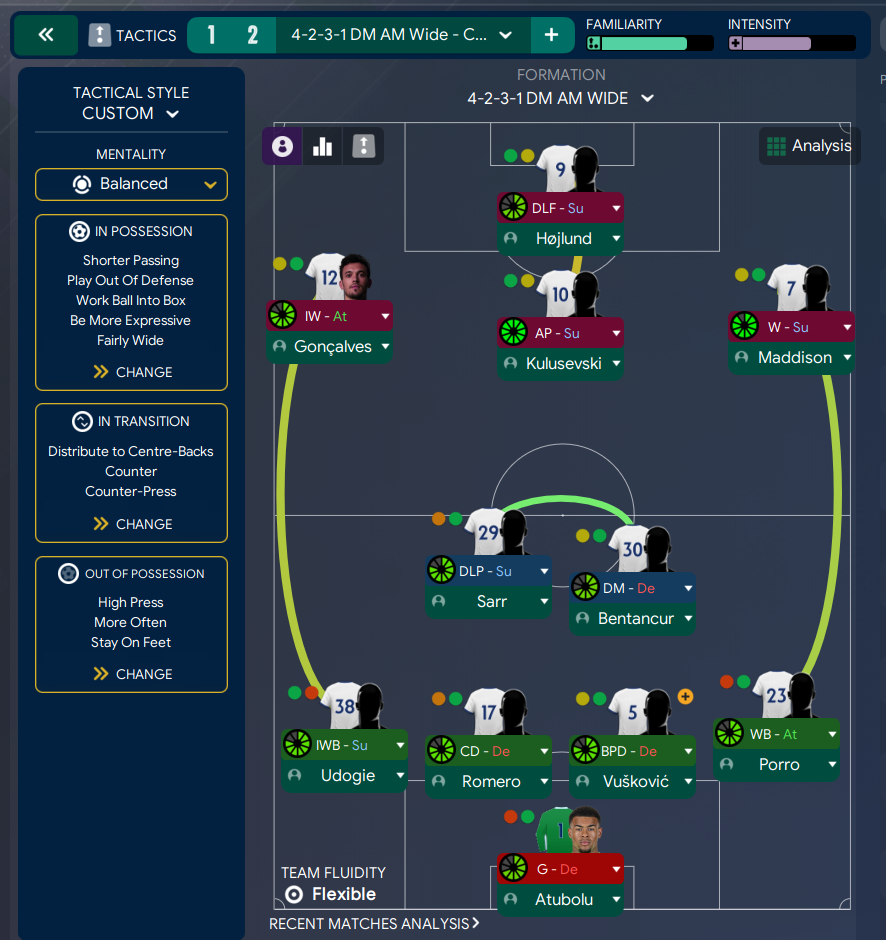
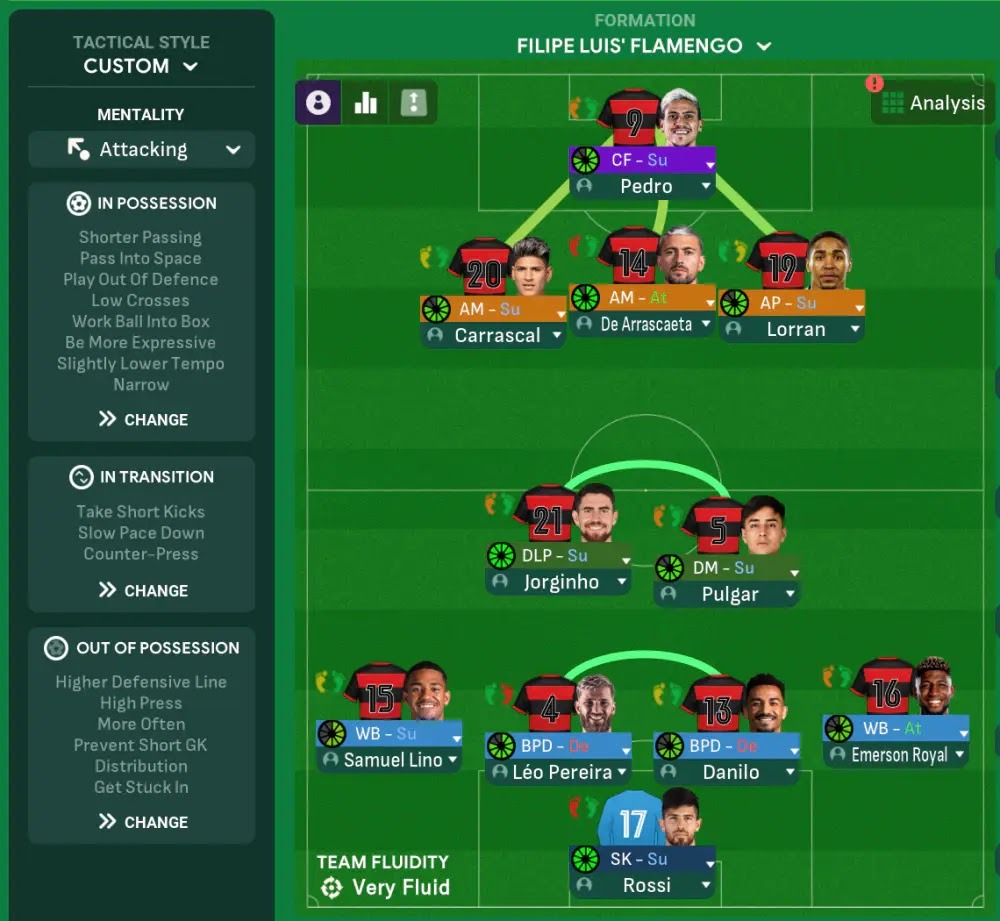
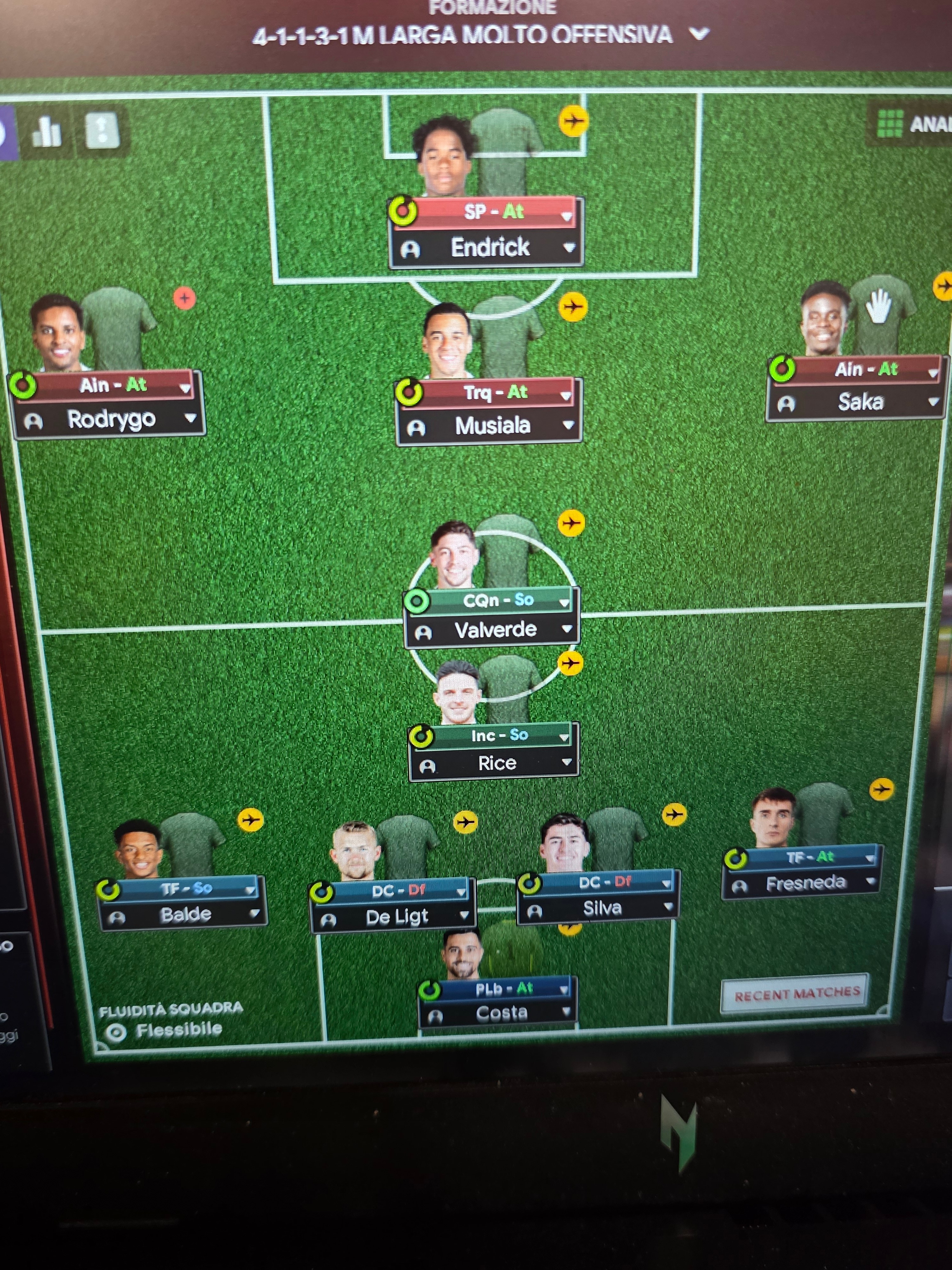
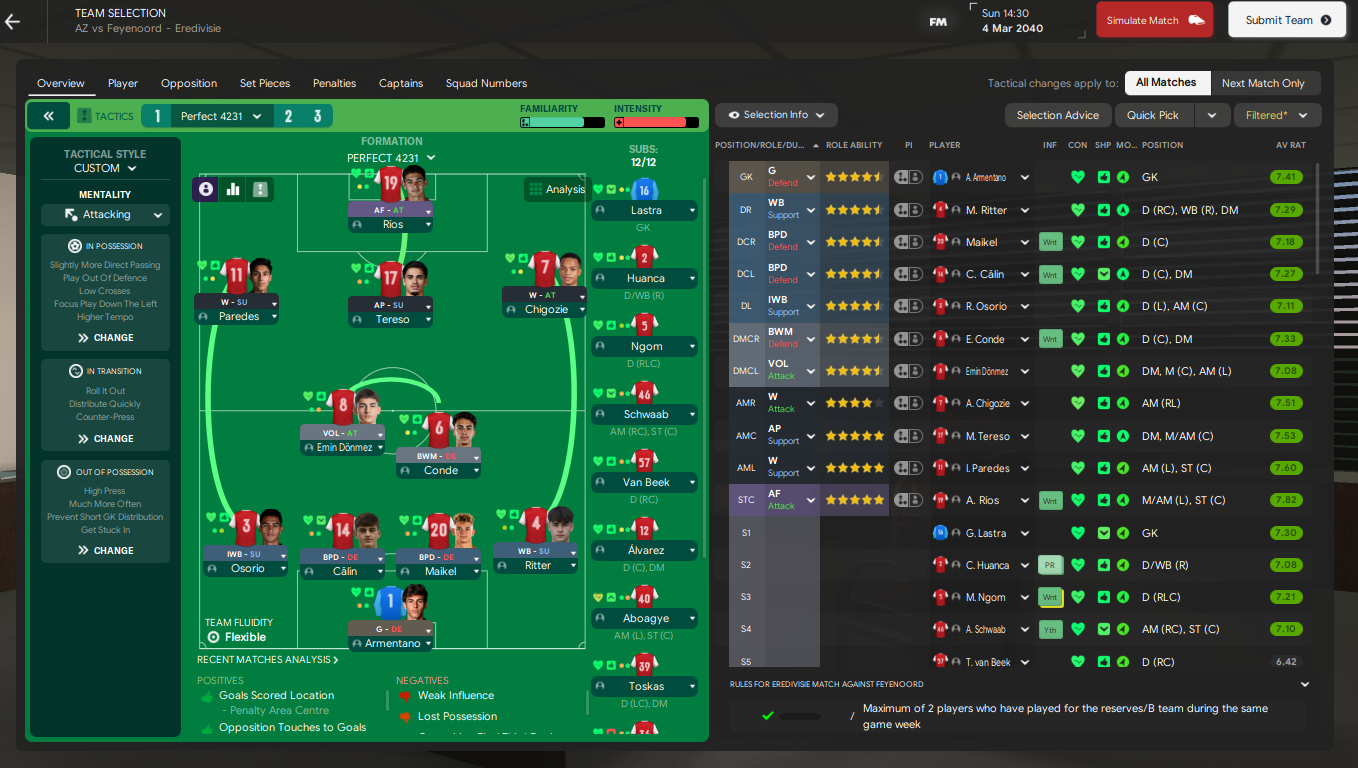
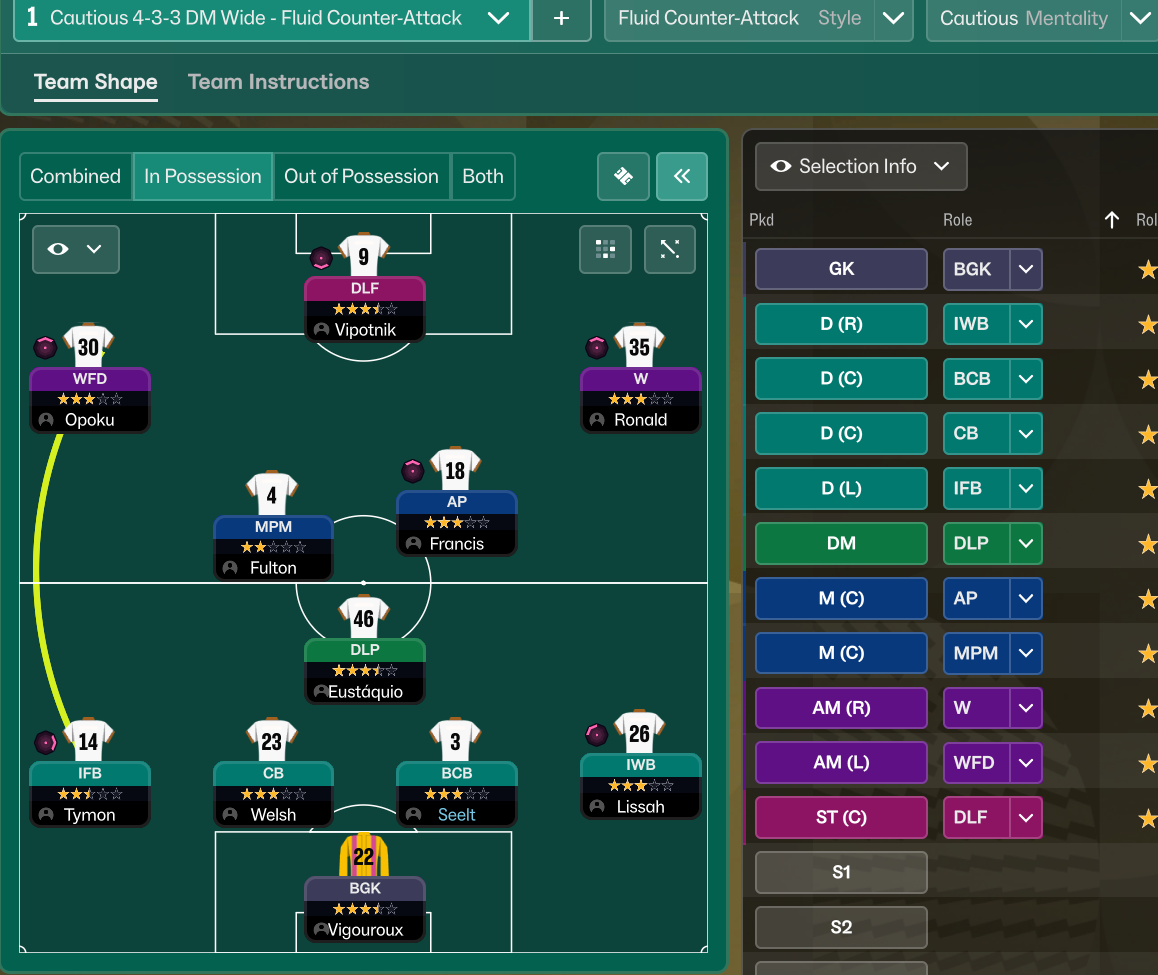
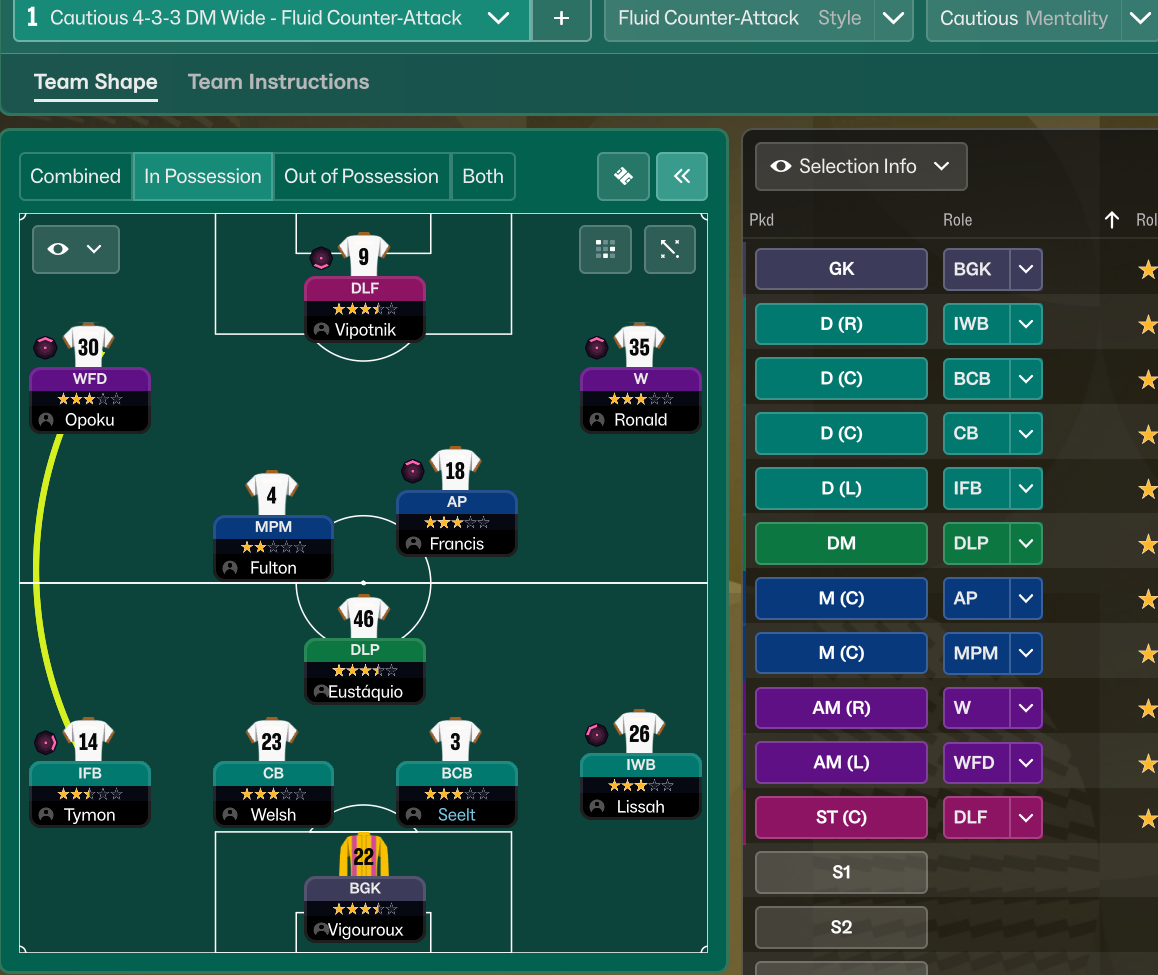
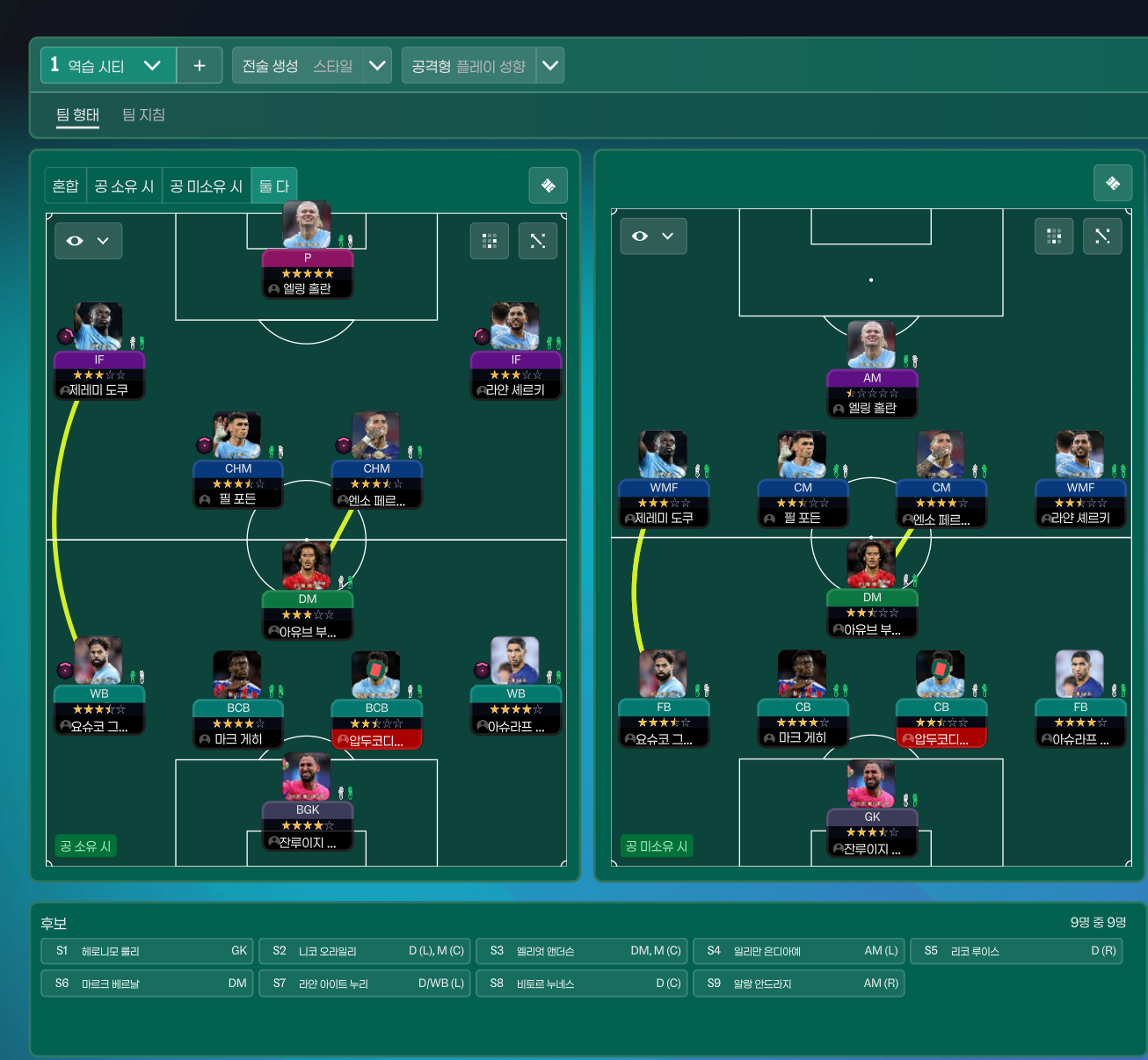
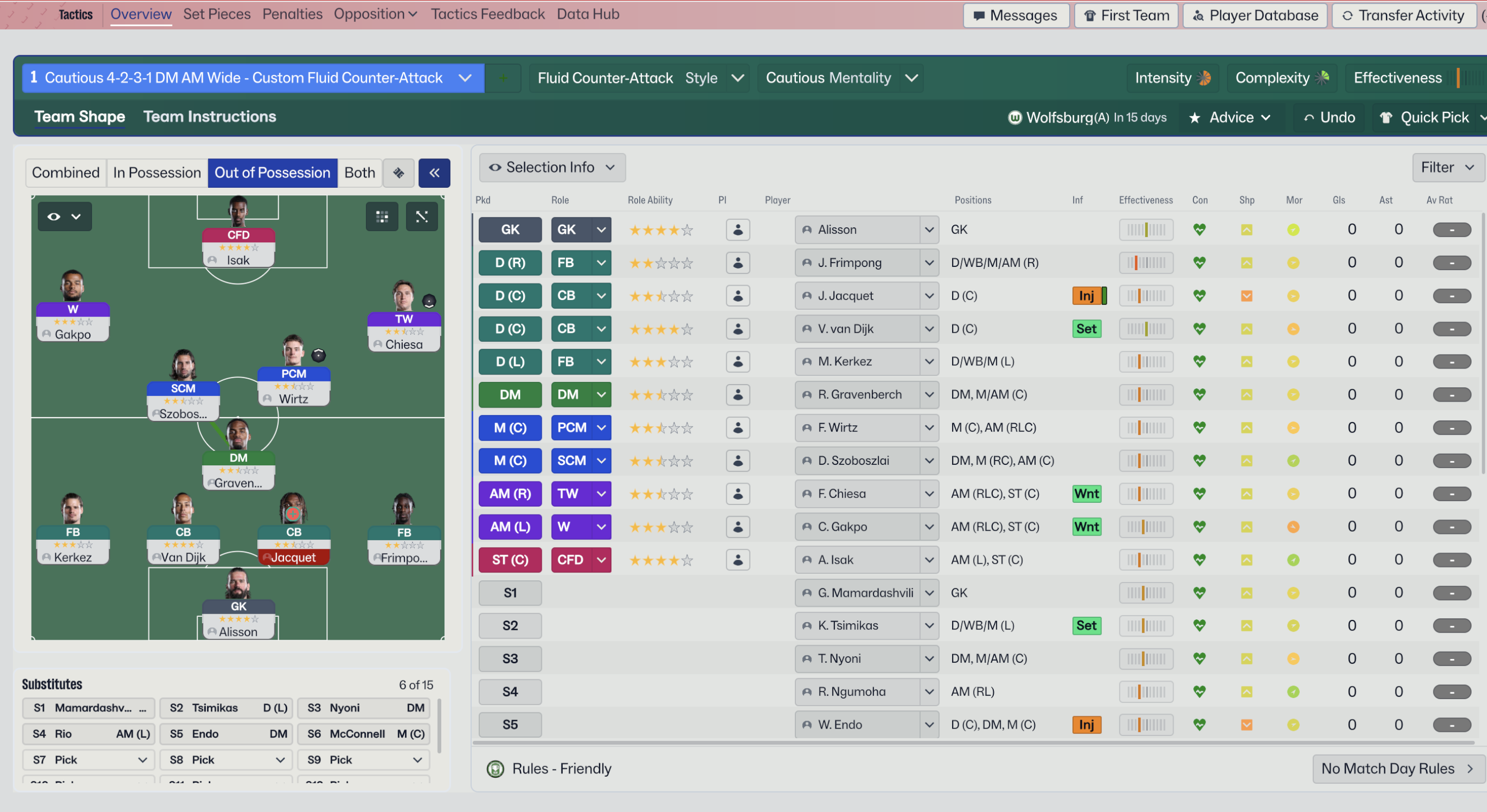
4-2-3-1
Utilize the width offered by wing-backs to stretch the opponent. The ability to transition quickly from defence to attack.
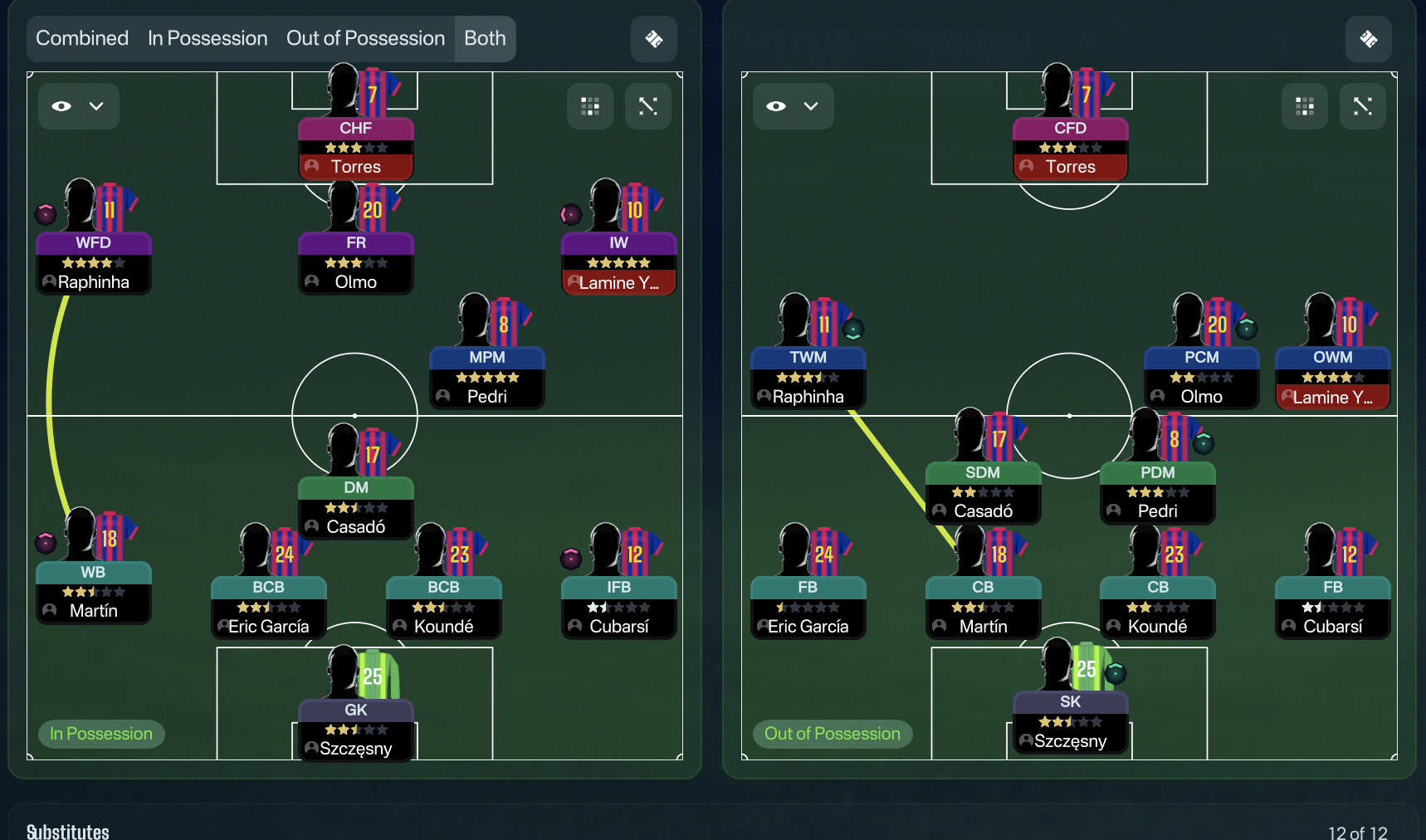
Loading tactical analysis...
Fluid Counter-Attack
Positive
4-2-3-1
Fluid
Pass into Space
Play Out of Defence
Work Ball into Box
Counter-Press
Counter
Higher Line of Engagement
Trigger Press More Often
GK
Sweeper Keeper
Support
CB
Ball-Playing Defender
Defend
CB
Ball-Playing Defender
Defend
FB
Inverted Full-Back
Support
WB
Wing-Back
Attack
DM
Defensive Midfielder
Defend
PCM
Central Midfielder
Support
TWM
Winger
Support
IW
Inside Forward
Attack
CHF
Complete Forward
Attack
Focus on quick transitions and exploiting space behind the opposition.
Immediate pressure on the ball and winning back possession quickly.
Utilize the width offered by wing-backs to stretch the opponent.
Compact
The team maintains a compact shape when out of possession to limit space.
Higher Line of Engagement with 'Trigger Press More Often'
Fluid
Players interchanging positions to create space and overloads.
Use of 'Work Ball into Box' to maximize opportunities.
The ability to transition quickly from defence to attack.
Presence of TWM and IW supporting the CHF at [6,3], [6,2] and [5,2].
The two CBs and DM provide strong defensive cover.
Both CBs [2,2] and [2,3] along with DM at [3,3] create a solid line.
Heavy usage of wide areas may leave central spaces exposed.
Utilization of both wing roles [4,1] and [5,1] could lead to gaps in midfield.
A higher defensive line may invite counter-attacks.
Combined with 'Higher Line of Engagement' can lead to vulnerability against fast forwards.
Counter-attacks
High line may expose team during transitions.
Highlighted by 'Higher Line of Engagement' tactic.
Central Spaces
High usage of wing space may allow enemies to exploit through the middle.
Evidence in tactics that focus on wing play.
Inside Forward and Complete Forward
Maximizes attacking options with overlapping runs.
Inside Forward at [5,1] and Complete Forward at [6,3] create diverse attacking angles.
Wing-Back and Central Midfielder
Allows for deeper support and recovery in transitions.
The positioning of WB at [2,1] and CM at [4,3] ensures coverage.
How can we further exploit defensive weaknesses in our opponents?
What adjustments can we make during the match to adapt to rival tactics?
Should we consider changing the formation based on our game situation?
The tactical theory behind the 4-2-3-1: roles, instructions, and the trade-offs that decide whether the system holds up.
Klopp-style gegenpressing in FM, including squad profile, line-and-press pairing, sustainable workload, and the antipatterns to avoid.
Double pivots and flat pairs in 4-2-3-1 and 4-4-2: when each pairing works, when it collapses, and the AMC unicorn that rescues both.
Mentality, duty, role, instruction, sub. The change hierarchy from lightest to heaviest intervention, and 60th-minute patterns by game state.