4-3-3 Wide
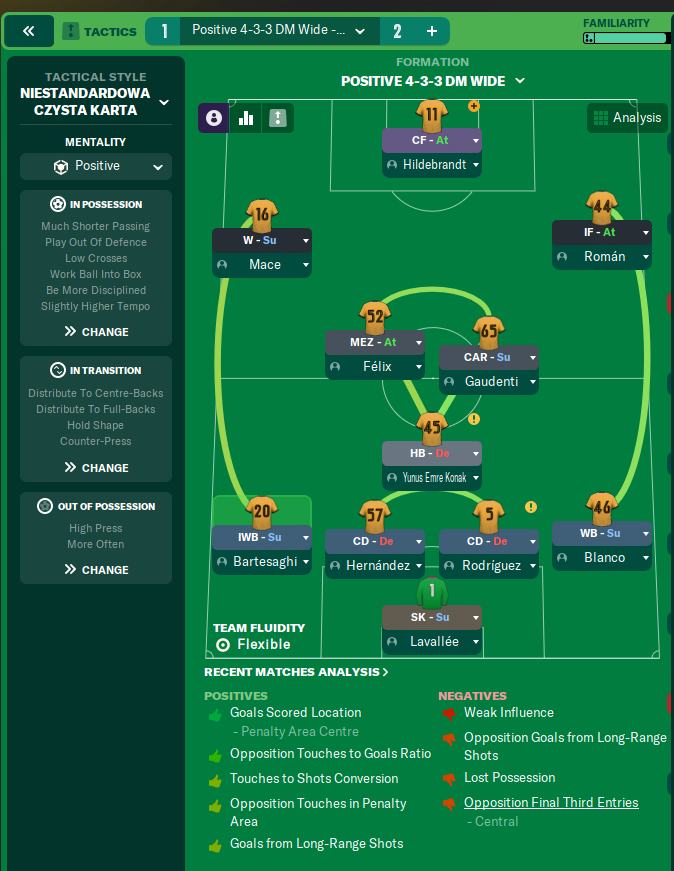
The focus on shorter passing and working the ball into the box allows for maintaining possession while creating quality scoring opportunities.
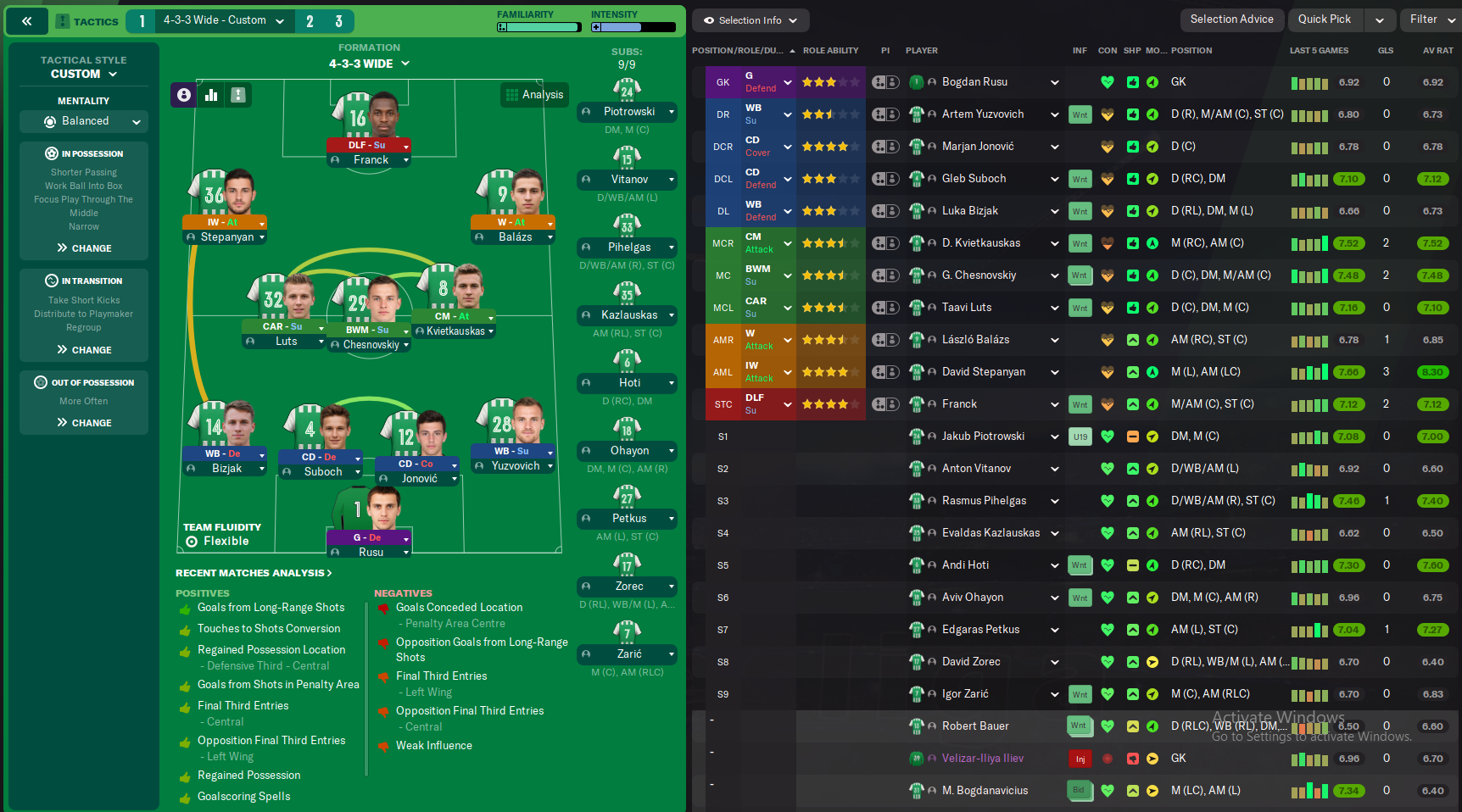
Loading tactical analysis...
Balanced
Positive
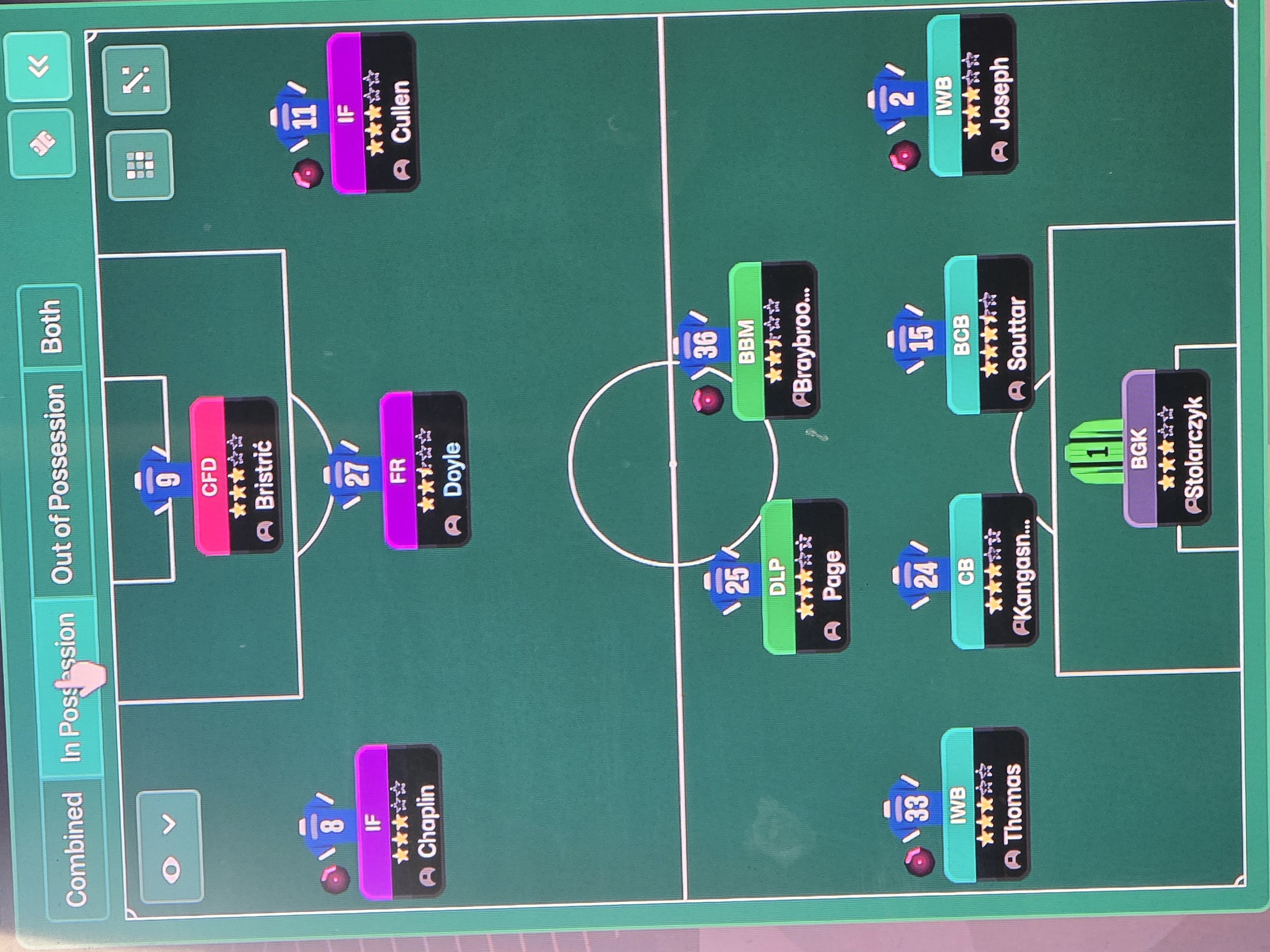
4-3-3 Wide
Flexible
Shorter Passing
Work Ball Into Box
Focus Play Through The Middle
Narrow
Take Short Kicks
Distribute to Playmaker
Regroup
More Often
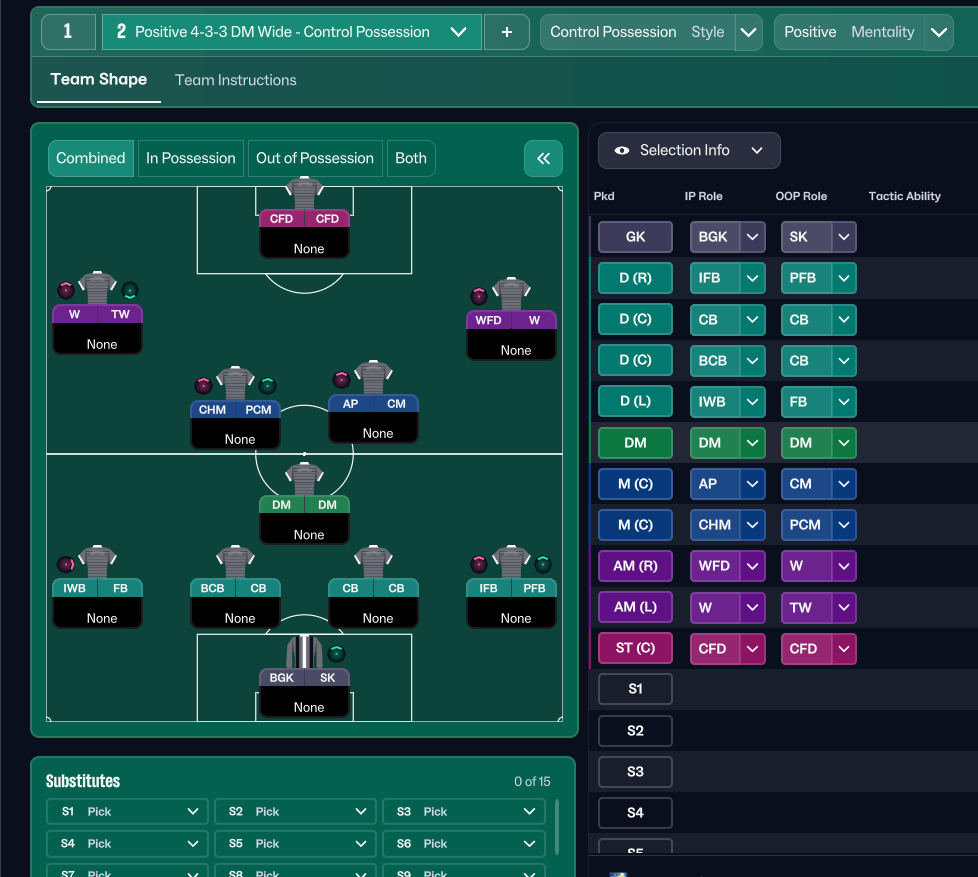
STC
Deep Lying Forward
Support
AML
Inside Forward
Attack
AMR
Winger
Attack
MCL
Carrilero
Support
MC
Box-to-Box Midfielder
Attack
MCR
Central Midfielder
Attack
DCL
Central Defender
Defend
DCR
Cover
Defend
DR
Wing Back
Support
DL
Wing Back
Support
GK
Goalkeeper
Defend
The focus on shorter passing and working the ball into the box allows for maintaining possession while creating quality scoring opportunities.
Using an inside forward and a winger helps stretch the opposition, creating space for midfielders and the deep-lying forward.
The narrow attacking philosophy may underutilize the strengths of the wide players unless carefully managed.
A balanced mentality might not fully exploit the attacking potential of the front three, particularly against weaker opposition.
How can I better integrate my wide players into the buildup?
Is there a need to adjust player instructions for my attacking players?
Should I change my midfield roles to avoid congestion?
Can the mentality be more aggressive in specific match scenarios?
How can I balance defensive solidity while maximizing counterattack potential?
Are my player roles optimized for the strengths of my squad?
The tactical theory behind the 4-3-3 Wide: roles, instructions, and the trade-offs that decide whether the system holds up.
Master the classic 4-3-3: player roles, tactical variations, and the trade-offs that decide whether it sings or stalls.
Holder, runner, creator: the role distribution rule for three-man midfields, the AMC variants, and the antipatterns that break them.
Build through the wide areas or through the middle? A working framework for picking the right one for your squad.