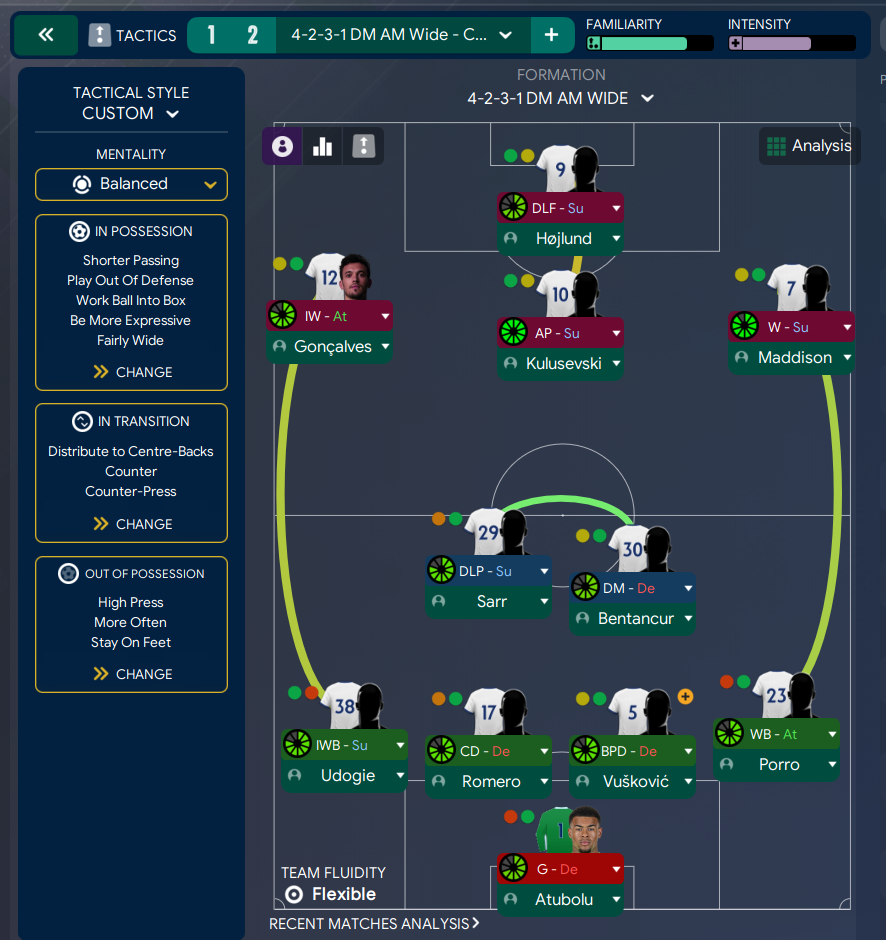
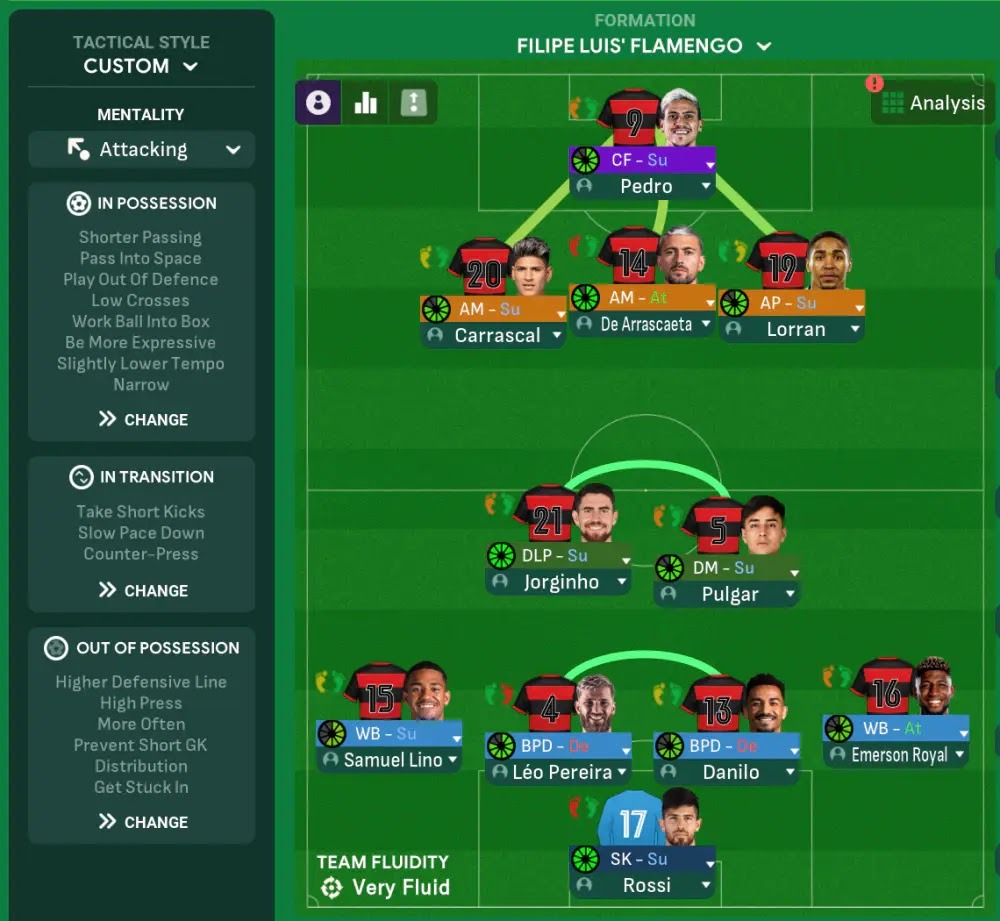
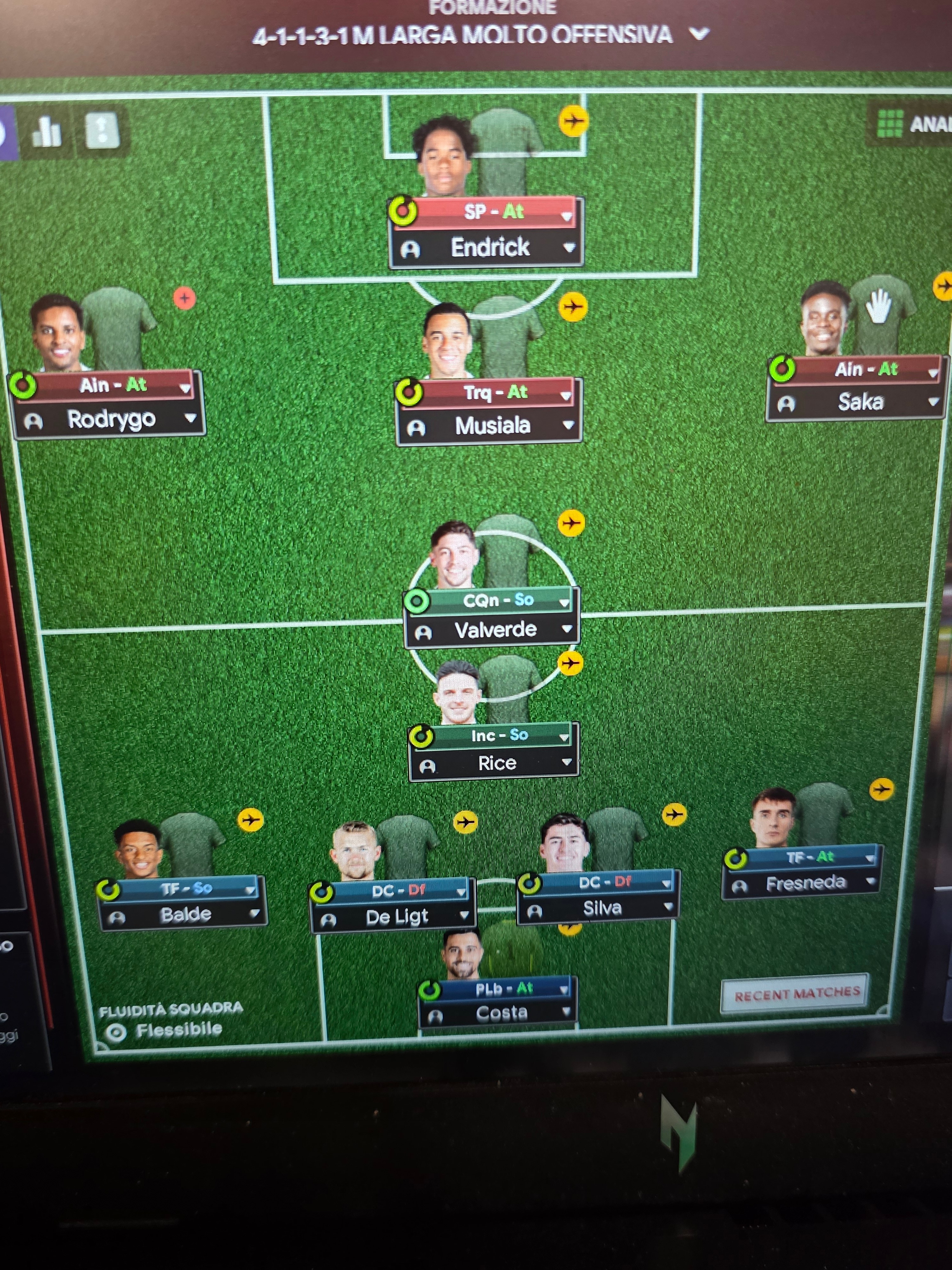
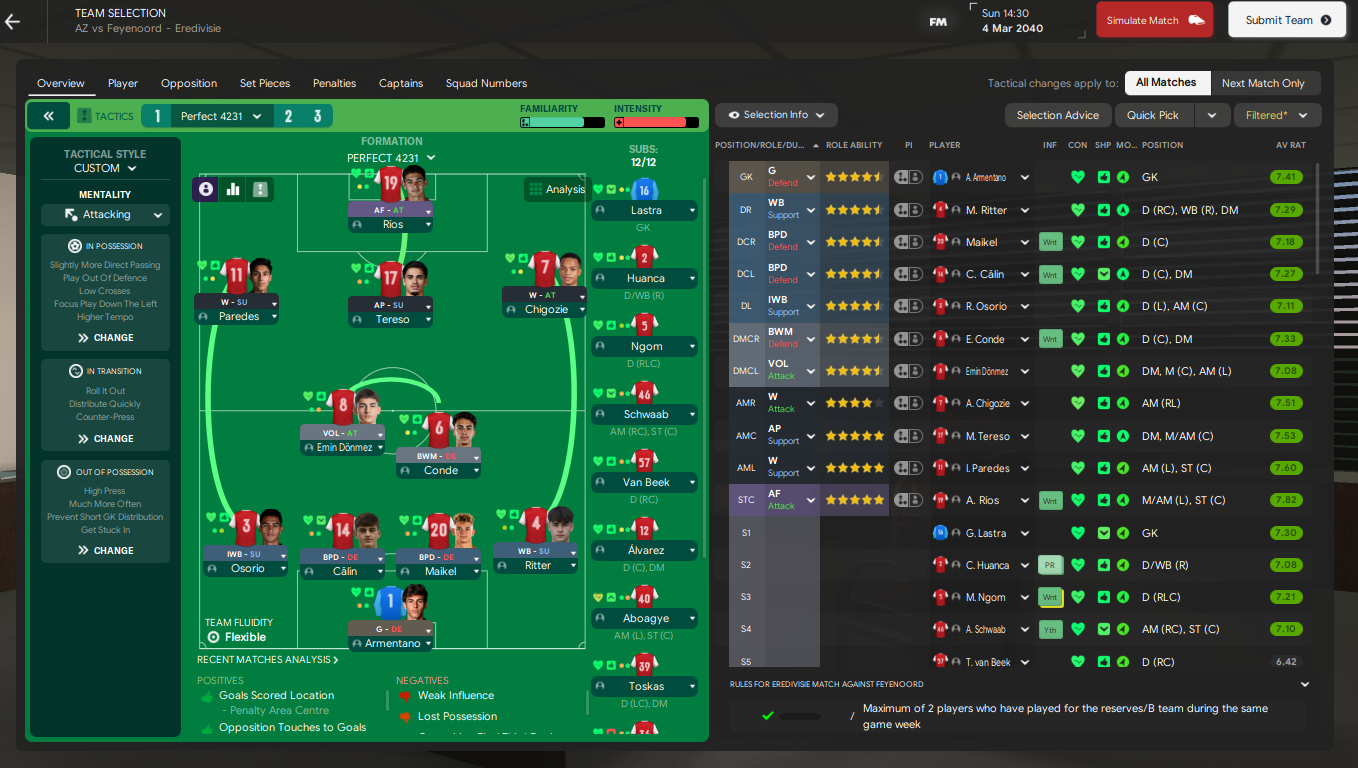
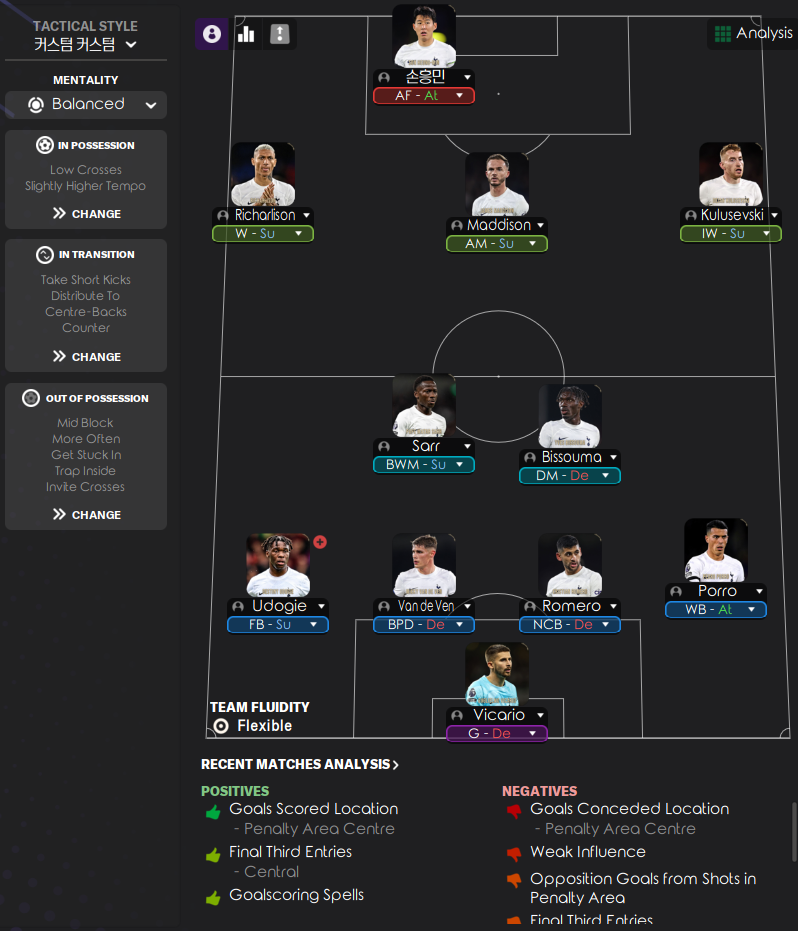
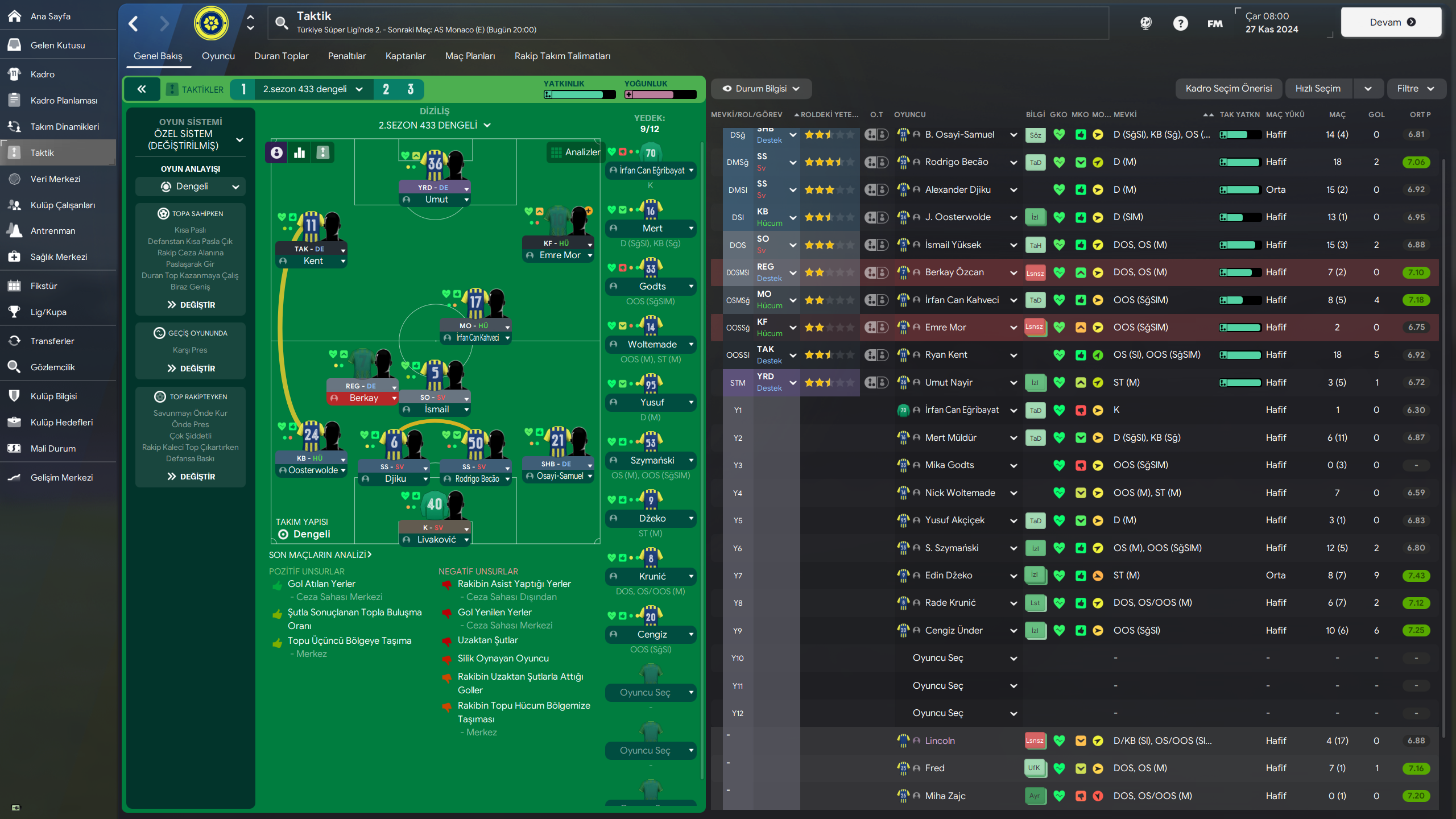
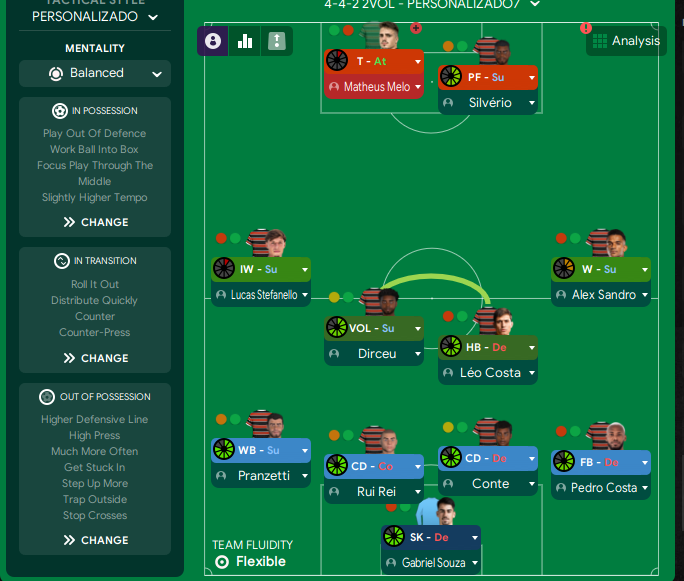
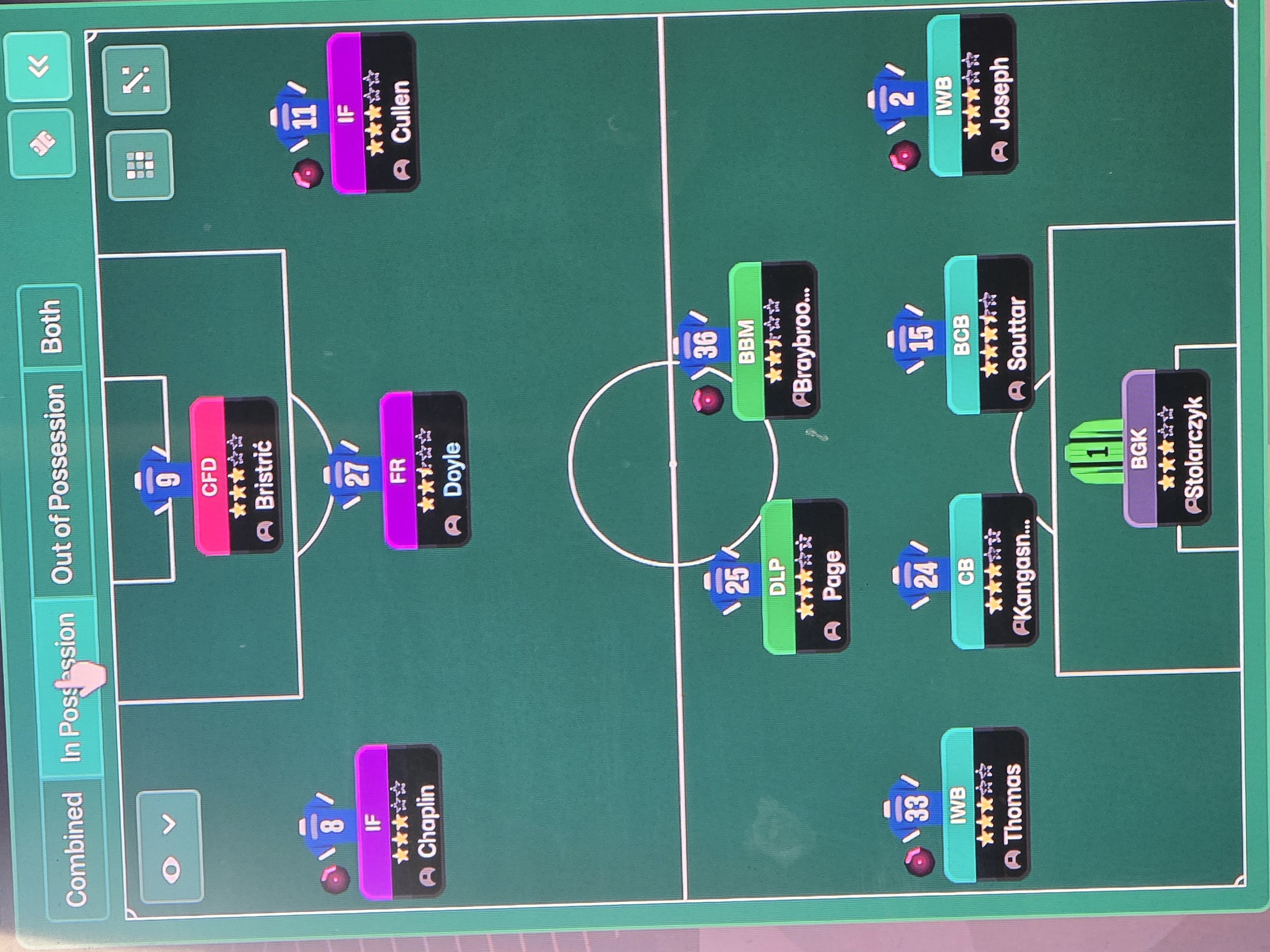
4-2-3-1
Utilizing width to stretch opposition defenses while central players create scoring opportunities. The DLP and BWM combination offers both creativity and…
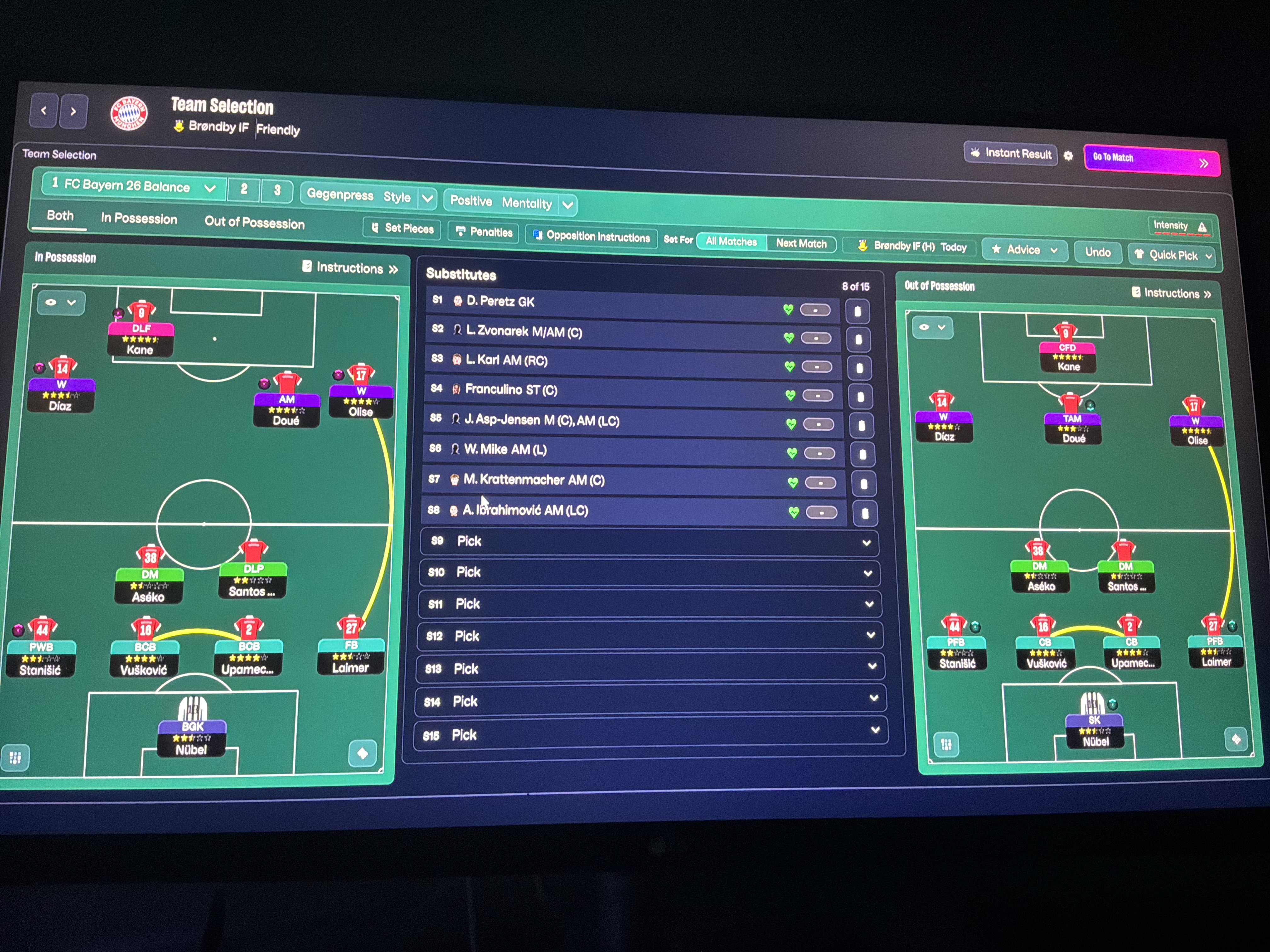
Loading tactical analysis...
Balanced
Positive
4-2-3-1
Pass Into Space
Look for Overlap
Play Out of Defence
Counter-Press
Counter
Higher Defensive Line
Higher Line of Engagement
Prevent Short GK Distribution
GK
G
LCB
BPD
Su
RCB
CB
De
LB
FB
Su
RB
FB
Su
DM
DLP
Su
DM
BWM
De
LAM
W
At
CAM
TREQ
At
RAM
W
At
ST
DLF
Su
Focus on ball retention and creating space through overlapping runs.
Quickly regain possession through counter-pressing after losing the ball.
Utilizing width to stretch opposition defenses while central players create scoring opportunities.
4-2-3-1
Compact shape making it difficult for opponents to penetrate the central areas.
Two defensive midfielders provide depth and protect the back four.
4-2-3-1
Fluid attacking shape with wide players looking to exploit space and cut inside.
Wide attackers and a trequartista create multiple attacking lanes for the striker.
The DLP and BWM combination offers both creativity and defensive stability.
DLP-S at [3,3] and BWM-D at [3,2] aid in both build-up and defensive phases.
Using wingers to stretch play opens up central attacking lanes.
W-A roles at [6,1] and [6,5] provide effective width.
Higher lines of engagement can lead to exposure if possession is lost.
Higher Defensive Line and Higher Line of Engagement may attract quick counters from the opposition.
If wide players are marked out, central options may be limited.
The reliance on W-A at [6,1] and [6,5] to create opportunities.
Defensive Line
The current setup may encourage opponents to exploit space behind
Higher Defensive Line allows for long through balls over the top.
Wide Areas
Over-reliance on wingers can lead to vulnerabilities in midfield when possession is lost.
W-A roles could create gaps in central midfield.
DLP + BWM
This combination balances defensive stability with creative build-up.
DLP-S at [3,3] assists in transitioning play, while BWM-D at [3,2] protects.
Wingers with DLF
The wingers complement the DLF by providing width and crossing options.
W-A roles pull defenders wide, creating space for DLF-S at [6,3].
How do we adjust tactics against teams that play lower defensive lines?
What alternative formations could enhance midfield control?
Should we analyze opponent’s wingers for tactical adjustments?
The tactical theory behind the 4-2-3-1: roles, instructions, and the trade-offs that decide whether the system holds up.
Klopp-style gegenpressing in FM, including squad profile, line-and-press pairing, sustainable workload, and the antipatterns to avoid.
Double pivots and flat pairs in 4-2-3-1 and 4-4-2: when each pairing works, when it collapses, and the AMC unicorn that rescues both.
How Mentality, Duty, and Role interact in FM, why duty trumps mentality every time, and the role-on-top-of-duty composition rules.